
Revenue Cycle Management for Medical Practices: 2026 Improvement Checklist
Explore the revenue cycle management stages and an actionable checklist for medical practices that want clearer reporting and fewer billing delays.
Explore the revenue cycle management stages and an actionable checklist for medical practices that want clearer reporting and fewer billing delays.
Revenue cycle management explained
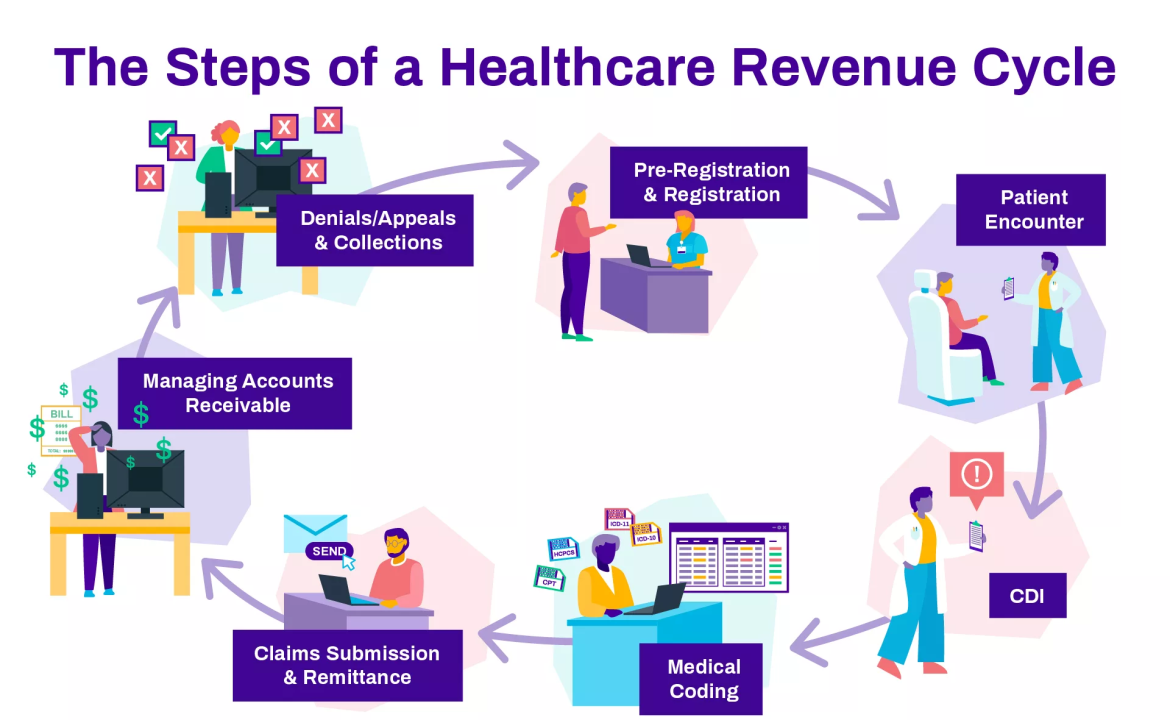
Revenue cycle management, often called RCM, connects the administrative and financial steps of a patient encounter. It begins with scheduling and patient registration, proceeds through eligibility and authorization, charge capture, coding, claim submission, payer response, and ends with accurate payment and balance resolution. RCM is not only a collections activity; it is also a quality and workflow discipline.
Front-end steps that protect downstream revenue
Registration errors can create avoidable rework long after a visit. Verify relevant patient identifiers, coverage dates, payer and plan information, and any required authorizations. Make responsibility for missing information explicit. When staff can see unresolved eligibility issues before a claim is filed, they can often address them earlier and avoid delays.
Middle-cycle controls
Track encounters that have not reached coding, claims that fail internal edits, and claims awaiting submission. Establish work queues with owners and expected completion dates. Coding decisions must reflect provider documentation and current coding and payer requirements. Automated checks can help identify missing fields, but they do not replace qualified human review of clinically sensitive coding questions.
Back-end RCM and payer follow-up
Review remittance and denial codes systematically. Separate claims needing corrections, additional documentation, appeals, or contractual payment reviews. Track follow-up dates and avoid duplicated outreach. Patient billing should be accurate and understandable, and any collection activities must follow applicable laws and agreements.
Practical metrics for an RCM dashboard
Useful indicators include days in accounts receivable, aging distribution, claim rejection rate, denial rate by category, net collection rate, and time from service to submission. Metrics need consistent definitions and reliable data extraction to be compared over time. A single percentage never tells the full story; monitor trends along with claim mix and payer changes.
A 30-day improvement plan
Week one: document the current workflow and baseline metrics. Week two: review a sample of denials and aging claims. Week three: assign owners and build standard follow-up queues. Week four: evaluate improvements and update procedures. Revisit performance regularly and include front desk, coding, billing, and practice leadership in the discussion.
Learn more and next steps
For background, consult the Centers for Medicare & Medicaid Services billing resources and review the specific payer rules that apply to your practice. For a review of your revenue cycle operations, contact Health Claims Partners LLC.
Need help improving your billing workflow? Contact Health Claims Partners LLC for a consultation.